Herbarium records lead Bucknell researcher to a new plant species in the Australian outback
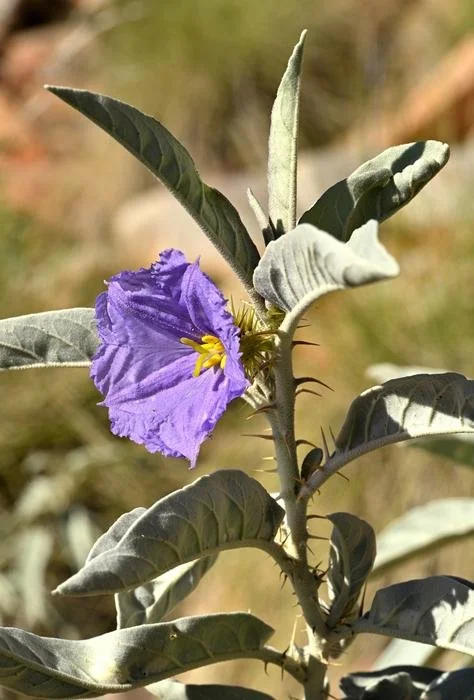
Morphology of Solanum nectarifolium, a newly-described species of Australian bush tomato. Photo courtesy of Kym Brennan.
“LEWISBURG, Pa. — A recent study led by Bucknell University Professor Chris Martine, biology, the David Burpee Professor in Plant Genetics & Research, has identified and described a new species of bush tomato with a special connection to ants — a taxonomic journey sparked by unusual specimens held in Australian herbarium collections.
The study, co-authored by a set of Australian botanists and Jason Cantley — the former Burpee Postdoctoral Fellow in Botany at Bucknell who is now Associate Professor of Biology at San Francisco State University — was published in the open-access journal PhytoKeys and underscores the critical role that natural history collections play in biodiversity science. The new species, Solanum nectarifolium, or the Tanami Bush Tomato, was named for the location of its original collection area — the northern edge of the Tanami Desert — and for the uniquely conspicuous nectar-producing organs on the undersides of its leaves. These extrafloral nectaries exude a sweet liquid to attract ants that might protect the plant from herbivores. This remarkable trait marks the first known Solanum species with extrafloral nectaries visible to the naked eye, a feature previously observed only microscopically in a handful of related Australian species.” — American Association for the Advancement of Science
