Videos

Chris Martine has been generating educational YouTube content since 2008, most of it as part of the “Plants are Cool, Too!” (PACT) project co-produced with Paul Frederick and Tim Kramer. The first PACT episode was posted in 2011 thanks to funding from the Botanical Society of America, with subsequent episodes funded through grants and by the institutions of the scientists featured in the videos. The goal has been the same from the beginning: to put a spotlight on awesome plants and the cool people who study them. The videos have been viewed on YouTube more than 200,000 times; and PACT has been used in hundreds of classrooms (both K-12 and at colleges/universities) as well as in museums and other science-based educational settings. Interested in using them for teaching? We’ve indexed them by subject below.

  • Understory Underdogs: Shrubs Are Cool, Too with Chris Martine

    Understory Underdogs: Shrubs Are Cool, Too with Chris Martine

    Webinar for the New Jersey Native Plant Society.

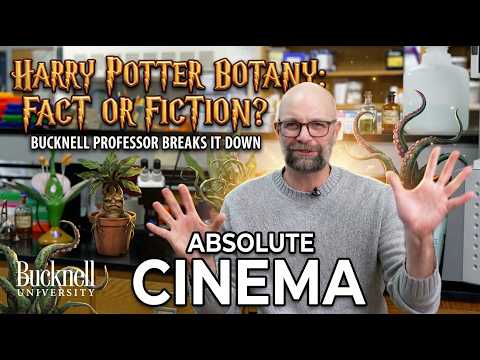
  • Bucknell Botany Professor Reacts to Harry Potter

    Bucknell Botany Professor Reacts to Harry Potter

    The wizarding world is more real than you think. Breaking down the real science behind Harry Potter’s magical plants.

  • How One Aboriginal Community is Making Things Better for an Important Plant

    How One Aboriginal Community is Making Things Better for an Important Plant

    Highlights one of the most important wild food plants to the Martu people of Australia's Western Desert, Wamula (Solanum diversiflorum) -- and a research project showing how Martu traditional practices are benefitting this species and the habitats it grows in. 

  • Team Schiedea (How to save a species from going EXTINCT)

    Team Schiedea (How to save a species from going EXTINCT)

    Highlighting one of the coolest and most ambitious projects in the history of rare species conservation, this episode takes us to Kaua’i, Hawai’i, where a group of passionate plant people are working to save some of the rarest plants on the archipelago — and tell us why we need a new generation of biodiversity lovers to help battle the extinction crisis.

  • Botany Student Protects Rare Plant with Genetics and Kayaks

    Botany Student Protects Rare Plant with Genetics and Kayaks

    Even plants we use in gardens can be rare in nature – and student Cheyenne Moore is doing her best to help protect one of the most popular perennial wildflowers in its native habitat in Pennsylvania. Join her on a kayak trip on the Allegheny River as she assesses the status of the blue false indigo (Baptisia australis) in unusual formations called scour prairies.

  • National Tropical Botanical Garden and rare plant protection

    National Tropical Botanical Garden and rare plant protection

    Behind-the-scenes view of the plant conservation pipeline at the National Tropical Botanical Garden on Kaua’i, where plant people are working every day to protect the plants of Hawai’i and the rest of the global tropics. Special focus on the importance of conservation horticulture.

  • Rappelling Scientists Find Rare Species Hiding for 100+ Years

    Rappelling Scientists Find Rare Species Hiding for 100+ Years

    A team of biologists drops off a cliff to learn more about one rare plant, but ends up discovering something completely unexpected with the help of science Twitter: white alumroot (Heuchera alba). 

  • Off-road Enthusiasts and Coal Land Forest Restoration

    Off-road Enthusiasts and Coal Land Forest Restoration

    Conservation takes partnership. Many off-roaders think conservationists are all “tree-huggers”… and many conservationists think off-roaders are all “tree-killers.” But somewhere in between there is a sweet spot where forests can be appreciated and cared for. In the case of the Anthracite Outdoor Adventure Area (AOAA), that sweet spot might even help to reinvigorate a local economy.

  • Undergraduate Research: How Today's Students are Doing Real Science

    Undergraduate Research: How Today's Students are Doing Real Science

    What's it like to do undergraduate research in college? How do you find a professor to work with? Is spending your summer working in a lab worthwhile? This student-produced mini-documentary follows the paths of Bucknell University's botanical research group from their work in the lab, greenhouse, and field to their presentations at the international Botany conference. 

  • Nature in New York City

    Nature in New York City

    The largest cities on the planet are home to millions of humans, but there is still plenty of nature to discover and appreciate in these urban habitats… if you know where to look. Shot on location at Inwood Hill Park, Manhattan.

  • Extreme Weeds of Parking Lots

    Extreme Weeds of Parking Lots

    Plants that survive in parking lots might be considered “weeds,” but they are also really great examples of extremophiles – organisms that survive, thrive, and evolve in Earth’s toughest habitats.

  • Legend of the Predator-proof Fence

    Legend of the Predator-proof Fence

    The first predator-proof management fence installed in the US is helping to prevent species extinction in Hawaii. 

  • Ay, Chihuahua! New Species in the Desert!

    Ay, Chihuahua! New Species in the Desert!

    What do you get when a team of biologists from Mexico and the US sets out to explore remote areas of the Chihuahuan Desert? Lots of examples of the evolution of new species on gypsum soils — and plenty of evidence that the world is still full of things to discover. 

  • Desert Blooms and Marathon Moths

    Desert Blooms and Marathon Moths

    Giant hawk moths fly for miles each night in search of flower nectar -- and are thus critically important as pollinators of desert wildflowers. Plant romance by the light of the full moon at New Mexico's White Sands National Monument. 

  • Undead zombie flowers of Skunk Cabbage

    Undead zombie flowers of Skunk Cabbage

    Smelling like a dead animal (or a zombie?) and having thermogenesis works out well for the plant known as skunk cabbage; and having this plant around works out well for our wetlands. 

  • Plants Are Cool, Too! Episode 2 : Fossilized Forests!

    Plants Are Cool, Too! Episode 2 : Fossilized Forests!

    Most plant fossils are impressions, but the ones in Clarkia, Idaho are actual leaves encased in rock for the last 15 millions years… and we might be able to use their DNA. 

  • Plants Are Cool Too! "The Pale Pitcher Plant" Episode 1: Sarracenia alata

    Plants Are Cool Too! "The Pale Pitcher Plant" Episode 1: Sarracenia alata

    How pitcher plants lure, trap, and digest insect prey… with the help of millions of mystery microbes. Focus on the habitat, life cycle, morphology and internal ecosystem of Sarracenia alata.